How to Repurpose Your Testimonials for Maximum Impact

Key Highlights
-
Repurposing testimonials increases their impact across multiple marketing channels.
-
Using testimonials on your homepage establishes immediate trust with visitors.
-
A dedicated testimonials page helps with SEO and organizes proof effectively.
-
Case studies enhance testimonials by adding context, challenges, and measurable results.
-
Sharing testimonials on social media boosts engagement and authenticity.
-
Email campaigns featuring testimonials help reinforce messaging and build credibility.
-
Video and audio formats make written testimonials more dynamic and engaging.
-
ProofFlow automates the collection and deployment of testimonials, seamlessly integrating with HubSpot for maximum efficiency.
Your best customer quotes are probably sitting in Google Docs, buried in Notion pages, or lost inside Slack threads after a launch call. Meanwhile, your sales team is chasing approvals, marketing is trying to lift conversions, and your pipeline is slowing down.
For many B2B SaaS and RevOps teams, testimonials are collected but rarely activated. They exist, but they are not influencing buying decisions, shortening sales cycles, or supporting deal momentum. Repurposing testimonials is not about reposting a quote occasionally. It is about placing proof exactly where it accelerates trust, reduces objections, and improves conversion rates across the funnel.
In this blog, we will break down practical, revenue-focused ways to repurpose testimonials across your website, product pages, sales enablement assets, paid campaigns, and retention workflows so every piece of customer proof actively supports pipeline growth.
What Is Testimonial Repurposing and Why You Should Repurpose Them?
Testimonial repurposing refers to the process of taking customer testimonials and using them across various channels and formats to reach a wider audience and increase their impact. Instead of simply collecting testimonials and leaving them on your website or social media, repurposing allows you to strategically share them in different ways that engage your target audience and address their pain points.
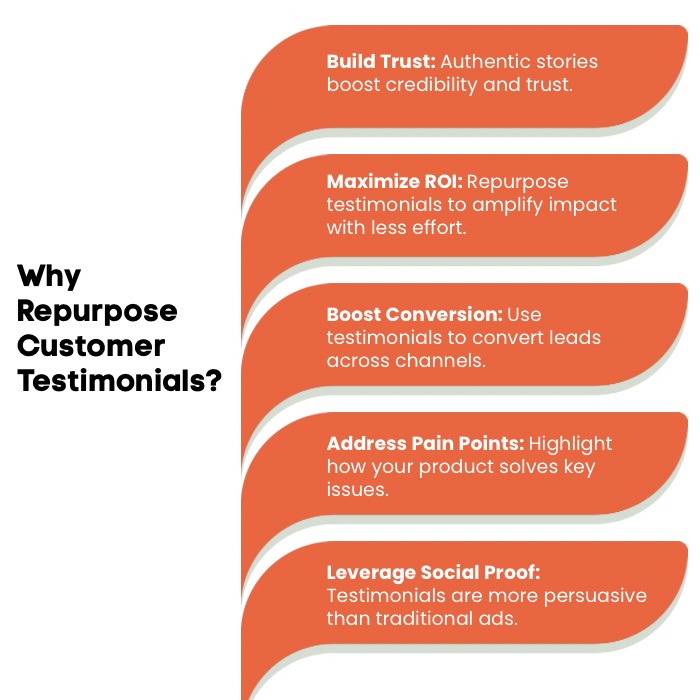
Repurposing your customer testimonials is a powerful tool in building trust and expanding your reach. Here’s why it’s a must for your business:
-
Build Trust: Sharing real stories about how your products or services have helped others adds credibility and authenticity to your brand, helping build trust with potential clients.
-
Maximize ROI: As small business owners, repurposing testimonials allows you to get the most out of what you’ve already collected, saving time and effort while amplifying your message.
-
Boost Conversion: Consistently using testimonials in emails, ads, and social media helps reinforce your brand’s value, making it easier to convert leads into loyal customers.
-
Address Pain Points: Tailor testimonials to your audience’s specific pain points. Highlight how your product solved a real issue, and you’ll resonate more deeply with target audience members facing similar challenges.
-
Leverage Social Proof: Customer testimonials are more influential than traditional advertising. They serve as authentic social proof, motivating potential clients to take action.
What Are 11 Easy Ways To Repurpose Your Testimonials?
Testimonials are one of the most powerful forms of social proof, yet many businesses fail to use them to their full potential. By repurposing your testimonials in creative ways, you can extend their reach and increase their impact across multiple touchpoints.
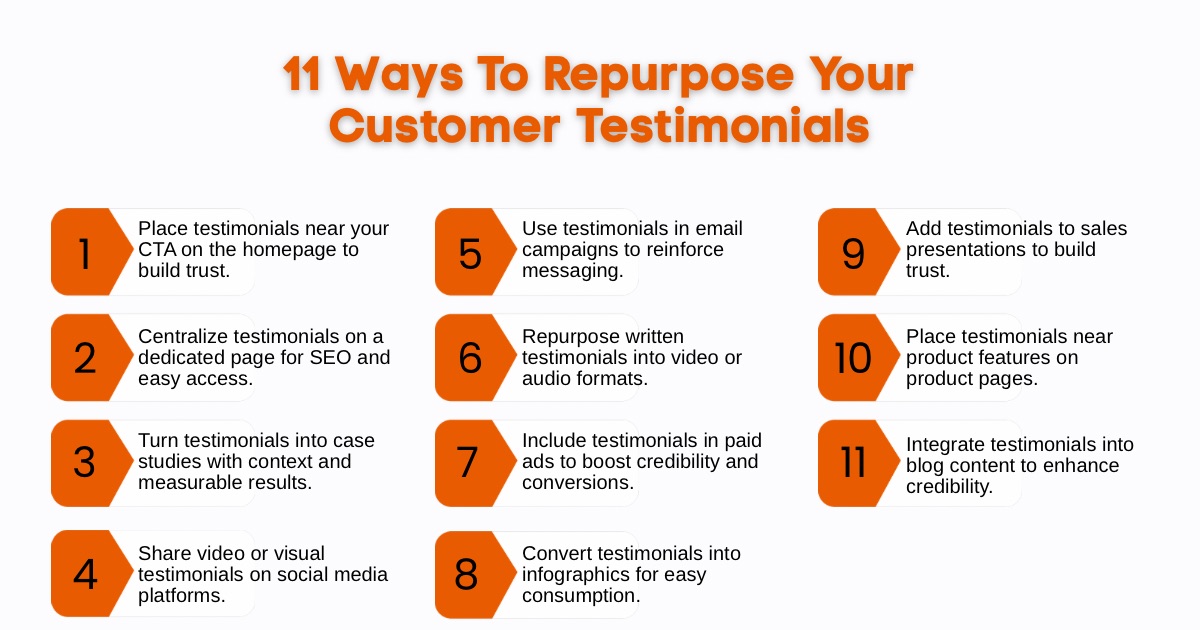
Here are 11 easy ways to repurpose your testimonials and maximize their value across your marketing efforts.
1. Add Testimonials To Your Website Homepage
Your homepage is often the first stop for new visitors. Placing a strong customer quote near the top helps establish trust right away. Choose experiences that speak directly to the value you deliver.
Position them close to your main call to action so people see proof and reason to stay engaged. Rotating a few testimonials can keep the page feeling fresh and credible.
2. Create A Dedicated Testimonials Page
A central testimonial page acts as a hub for social proof on your site. Visitors and search engines can find and review all your best customer stories in one place. To boost SEO, use relevant headings, optimized keywords, and meta descriptions.
Organize testimonials by theme, product, or customer type so visitors find what matters to them most. You can also link to this page from your homepage, email campaigns, and ads for added visibility.
3. Turn Testimonials Into Case Studies
Case studies take a testimonial to the next level by adding context and results. Begin by outlining the challenge your customer faced, the solution you provided, and the measurable results they achieved. Highlight metrics such as percentage improvements, time savings, or performance gains to make the story more persuasive.
This deeper format can be used on your blog, sales pages, or in proposals. This form of repurposing testimonials turns anecdotes into structured proof of value.
4. Share Testimonials On Social Media
Social platforms are ideal for short, attention-grabbing pieces of social proof. Pair customer quotes with engaging visuals or video clips to stand out on Instagram, TikTok, LinkedIn, or Facebook.
Carousels of quotes, pull-quote graphics, and customer testimonial video snippets from recorded testimonials perform well because they feel authentic and easy to consume. Rotate these posts regularly to reinforce your message and attract new audience segments.
5. Feature Testimonials In Email Marketing
Including testimonials in your email campaigns builds trust with subscribers and supports the message you are sharing. A one or two-sentence testimonial can reinforce a benefit in a product email, nurture series, or even in email signatures.
You can also create dedicated testimonial emails that tell a customer story in narrative form to engage readers and encourage them to take the next step.
6. Repurpose Written Testimonials Into Video Or Audio
Transforming written quotes into video or audio brings them to life. You can create short clips with voiceovers or animated text and imagery that highlights the testimonial key points.
Use these formats on social media, landing pages, or during webinars to add dynamic proof. Pulling quotes for voiceovers helps connect emotionally with viewers and gives another way for audiences to engage with your testimonials.
7. Use Testimonials In Paid Ads
Including testimonials in paid campaigns adds credibility to your paid messaging and can increase conversions. Use them in ad copy, display creatives, and sponsored content across platforms such as Google ads, Meta ads, and LinkedIn ads.
Pair a short, strong customer quote with a clear call to action to reinforce why someone should click. Testimonials act like mini endorsements that can lift ad performance and make your message resonate more effectively.
8. Transform Testimonials Into Infographics
Infographics are a visual way to present testimonials and related outcomes in a narrative format. Combine customer quotes with stats, charts, and iconography to tell storylines at a glance.
These visuals work well in blog posts, as shareable social content, or in presentations. They help distill insight into digestible pieces and can be especially effective when you want to emphasize results and comparisons.
9. Include Testimonials In Sales Presentations
Your sales team can use testimonials as proof points in pitch decks, proposals, and follow-up emails. Embed quotes or short video clips into slides at stages where buyers need reassurance about your solution.
Pair them with specific metrics or customer outcomes to strengthen your argument and make conversations feel more grounded in real success stories.
10. Add Testimonials To Product Pages
Product pages benefit from social proof when it supports specific features or benefits. Place testimonial quotes near sections that describe critical aspects of your offering.
Start with a handful of strong voices and change them over time to reflect fresh experiences or new product updates. This kind of repurposing helps prospects understand how others have succeeded with the exact product they are considering.
11. Publish Testimonials In Blog Content
Integrating testimonials into related blog posts enriches your content and provides real-world context. Use customer quotes to illustrate points, reinforce value, or support your claims within articles.
When relevant, link those stories to internal pages or case studies to keep readers moving through your site. This method not only improves engagement but also helps your content feel more credible and relatable.
Repurposing testimonials in these creative ways allows you to maximize their impact, build trust with your audience, and boost conversions across all your marketing channels.
Want to explore the top tools for managing testimonials in 2026? Check out our guide for the best options.
What Are the Best Practices for Making the Most of Your Testimonials?
Repurposing testimonials effectively requires a thoughtful strategy. To get the most value from your customer feedback, it’s essential to follow best practices that ensure your customer reviews resonate with potential customers and align with your broader marketing strategy.
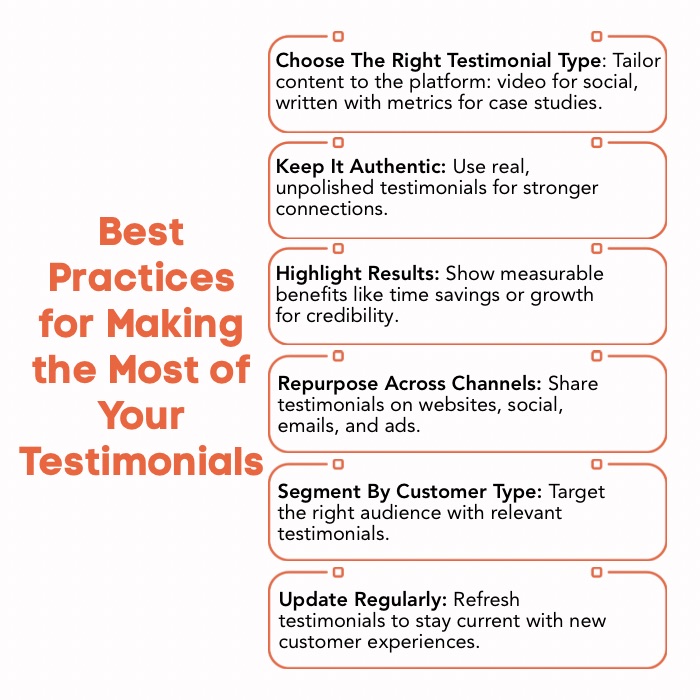
Here are the key practices to keep in mind when repurposing your testimonials across different channels.
1. Choose The Right Type of Testimonial For Each Channel
Not all customer testimonials are created equal, and certain types of testimonials perform better on specific platforms. For instance, video testimonials are highly engaging on social media.
Whereas, written testimonials with specific metrics may work better in case studies or on product pages. Tailor the type of testimonial to the format and audience you’re targeting for maximum impact.
2. Keep It Authentic And Relatable
When you share positive reviews, it’s crucial that they come across as real people sharing genuine experiences. Avoid overly polished or scripted testimonials.
Authenticity resonates more with new customers who are looking for proof that your product or service truly works. Sharing real stories from happy customers creates a stronger connection with potential buyers.
3. Focus On Results And Benefits
While testimonials are great for emotional connection, they are even more powerful when they highlight measurable results. Focus on the specific benefits happy customers have experienced, such as time savings, revenue growth, or solving a problem.
Quantifiable results make your testimonials more credible and help you speak directly to the pain points of your potential customers.
4. Use A Mix Of Testimonials Across Channels
Don’t limit your testimonials to one type or platform. Repurpose your testimonials across multiple channels, such as your website, social media, email campaigns, and ads.
Each platform has its own strengths, and sharing diverse formats (written, video, image quotes) helps engage a broader audience. This cross-channel approach ensures you’re tapping into every opportunity to build trust and engage new customers.
5. Segment Testimonials By Customer Type
Segmenting testimonials based on customer type, industry, or use case helps ensure your testimonials resonate with the right audience.
For instance, if you’re targeting small business owners, use testimonials from similar customers that speak to the challenges they face. This approach makes it easier for your audience to relate and increases the likelihood of converting potential customers.
6. Refresh Testimonials Regularly
Keep your customer feedback fresh and relevant. Over time, your products or services will evolve, and so should your testimonials.
Regularly refresh the testimonials you share to reflect new customers and the latest features or improvements to your offerings. Keeping testimonials updated shows your brand is constantly improving and in tune with your customers’ needs.
Repurposing testimonials the right way builds credibility, engages your audience, and boosts your marketing. By following these best practices, you’ll turn positive reviews into powerful tools that drive results across all touchpoints.
If you’re looking to streamline your testimonial process even further, check out how testimonial automation can help grow your business.
What Common Mistakes Should You Avoid When Repurposing Testimonials?
Repurposing testimonials can amplify credibility, but careless reuse can quickly weaken trust. When testimonials feel repetitive, overly edited, or out of context, prospects become skeptical. Without strategic alignment and relevance, the proof meant to build confidence can quietly undermine it instead.
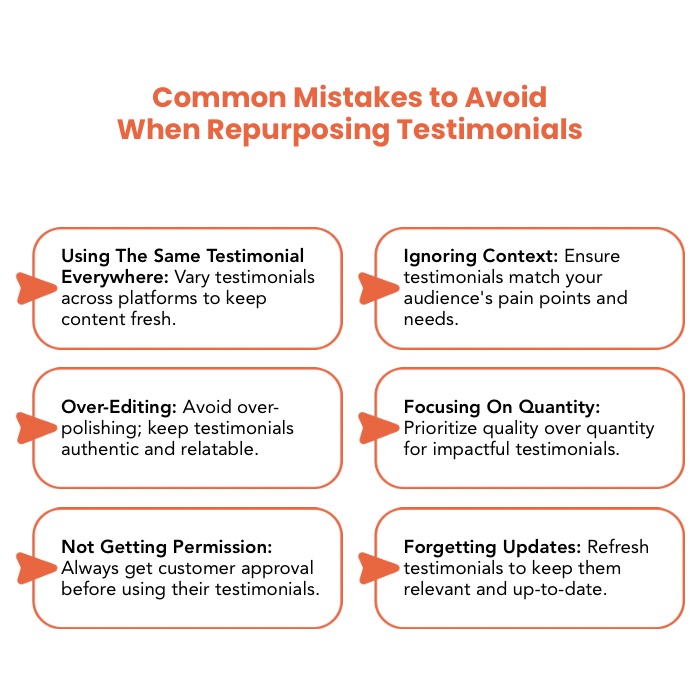
Here are the key pitfalls to steer clear of so that your testimonials are repurposed in an effective way:
1. Using The Same Testimonial Everywhere
Recycling the same testimonial across multiple platforms or formats can come off as repetitive. While consistency is important, make sure you vary the testimonials you share to keep content fresh and relevant for different audience segments.
2. Ignoring Context Or Relevance
Using a testimonial that doesn’t directly apply to your audience or current messaging can backfire. Always ensure that the testimonial aligns with the pain points and needs of the specific audience you’re targeting at the moment. Context is key to making your testimonials resonate.
3. Over-Editing Testimonials
While polishing your testimonials for clarity is fine, over-editing or scripting them too much can strip away authenticity. Testimonials should feel natural and genuine, not overly refined. The real power comes from the honest voice of your happy customers.
4. Focusing On Quantity Over Quality
It’s tempting to share as many testimonials as possible, but quality always trumps quantity. A few powerful, well-chosen testimonials that speak directly to key benefits and measurable outcomes are far more effective than a long list of generic feedback.
5. Failing To Get Permission
Before repurposing a testimonial, especially in a public space, make sure you’ve received proper permission from the customer. Not getting approval could lead to trust issues and potential legal concerns. Always follow best practices for collecting consent when using customer feedback.
6. Forgetting To Update Testimonials
Testimonials that were once relevant may become outdated over time. As your products or services evolve, make sure your testimonials do too. Regularly refresh your content with recent reviews to ensure they reflect your current offerings and customer experiences.
When testimonial execution lacks structure, it weakens credibility instead of strengthening it. Strategic curation, placement, and authenticity turn testimonials from decorative content into measurable revenue assets.
Want to understand why HubSpot customer testimonials are so impactful? Learn how customer testimonials influence buyer decisions.
How ProofFlow Can Simplify and Supercharge Your Testimonial Strategy?
If you’re looking to take your testimonial repurposing to the next level, ProofFlow is the solution designed to seamlessly integrate with your existing workflows. As a HubSpot-native platform, ProofFlow automates testimonial collection, storage, and deployment, eliminating the need for manual processes or disconnected tools.
With ProofFlow, you can:
-
Automate testimonial requests based on NPS, deal stages, or custom CRM criteria, ensuring you’re always gathering the right customer feedback at the right time.
-
Centralize your proof library, making it easy to search, tag, and manage testimonials directly within HubSpot: no more scattered spreadsheets or disjointed systems.
-
Repurpose testimonials consistently by embedding them across your website, product pages, landing pages, and email campaigns using dynamic widgets and HubSpot workflows.
-
Ensure compliance and control by reviewing, tagging, and approving testimonials with built-in approval workflows, so you can confidently publish authentic, trustworthy customer stories.
Whether you’re a small business owner or part of a marketing team, ProofFlow automates and integrates with HubSpot to streamline social proof, personalize campaigns, and boost engagement at scale. It’s an easy way to turn client testimonials into valuable marketing assets.
Ready to take your testimonial strategy to the next level? Try ProofFlow free today and see how easy it is to transform your marketing.
Final Thoughts
Repurposing client testimonials in various forms is a great way to amplify the impact of testimonials across your marketing campaign. By sharing customer voices on social media platforms, you can strengthen your social media strategy and connect with your audience on a deeper level. A positive experience shared by real customers can significantly enhance trust and influence potential clients, making testimonials an invaluable tool for driving engagement and conversions.
Frequently Asked Questions
How to repurpose SaaS customer interviews for marketing?
Repurpose SaaS customer interviews by turning them into case studies, video clips, or blog posts. Highlight customer pain points, solutions, and results to show the value of your product. This content can be shared across social media and your website to build trust.
Can I modify clients testimonials?
Yes, but only with permission. It’s important to ensure accuracy and maintain the authenticity of the testimonial. You can edit for clarity or length but always keep the original meaning and get approval from the customer before publishing.
What are some creative ways to use testimonials?
Creative ways to use testimonials include turning them into video content, using snippets in social media posts, integrating them into your email campaigns, and creating infographics or quote graphics for your website. These formats make testimonials more engaging and shareable.
Do I need permission to use customer testimonials?
Yes, always get permission before using customer testimonials. Whether you’re featuring written or video testimonials, customer consent is essential to ensure legal compliance and maintain trust. Always respect privacy and ask for approval when needed.
What are some creative ways to repurpose testimonials for social media posts?
Repurpose testimonials for social media by creating visually engaging posts, such as quote graphics, video snippets, carousel posts, or stories. Tailor them to the platform, ensuring they resonate with the audience, whether it’s a short quote or a video testimonial.
How can I turn customer testimonials into engaging content for my website?
You can turn customer testimonials into engaging content by placing them strategically on product pages, creating a dedicated testimonials page, or turning them into case studies. Adding multimedia, like videos and images, makes the testimonials more engaging and relatable.
What are the best strategies for using client testimonials as social proof?
The best strategies for using client testimonials as social proof include showcasing them on key pages like landing pages, product pages, and email marketing. Use authentic, diverse testimonials that highlight specific benefits and align with the potential customers’ needs.
How do I use testimonials in email marketing campaigns?
In email marketing, incorporate testimonials in the body of your emails or as a signature at the end. You can also send a dedicated email featuring a customer story or a powerful quote to build trust and encourage conversions from subscribers.
Can you suggest ideas for making testimonial videos from written reviews?
To make testimonial videos from written reviews, ask customers to record a video reading their review or talk about their experience. Use animation or voiceovers to turn written feedback into dynamic videos. Adding visuals or customer results can make them more impactful.
How can I repurpose testimonials into blog content?
Repurpose testimonials into blog content by incorporating them into relevant articles. Use customer stories to illustrate points, support claims, or offer insights. You can also create a dedicated blog post that features multiple testimonials showcasing different aspects of your product or service.
Ready to automate your testimonial collection?
Get full access to ProofFlow at no cost during our free beta. The complete testimonial automation platform for HubSpot.
Get Started Free